How to go busking with Jaaz Acoustics amplifiers powered by 230V AC

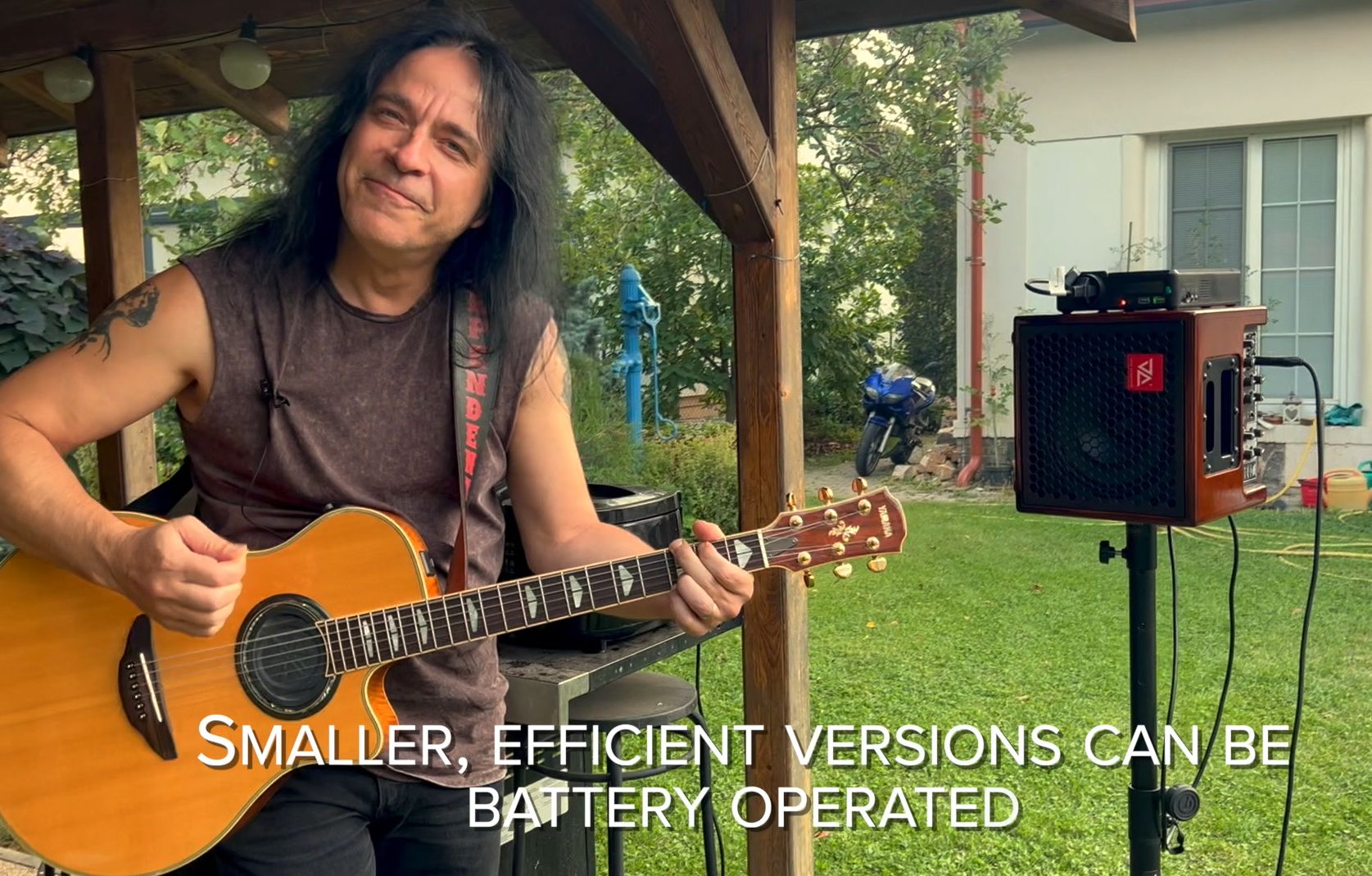
For several years, Jaaz Acoustics offered the Traveler model, which could be powered either from a 230 V AC mains supply or from a 12 V DC battery. Due to low sales volumes, however, we discontinued production of this model. So how can JAAZ combo amps be powered when performing in locations where mains power is not available, such as streets, parks, boats, and similar environments?
We tested several commercially available portable power stations with a 230 V AC output and power ratings ranging from 100 to 200 W. Because these units operate independently of the amplifier itself, they make a practical busking accessory. Whenever fully independent operation is required, the power station can simply be carried in the side pocket of the gig bag.
Depending on the type of instrument being used, the available battery capacity provides approximately 2 to 5 hours of independent operation. Power consumption varies according to the instrument and its so-called crest factor. With an amplifier peak output power of 250 W, an acoustic guitar typically results in an RMS power consumption of approximately 35 W, while a high-gain guitar signal may result in an RMS power consumption of approximately 80 W at the same 250 W peak output power (see https://www.jaazacoustics.com/step-up-transformers-120-230v-ac-for-eu-amplifiers-used-in-the-usa).
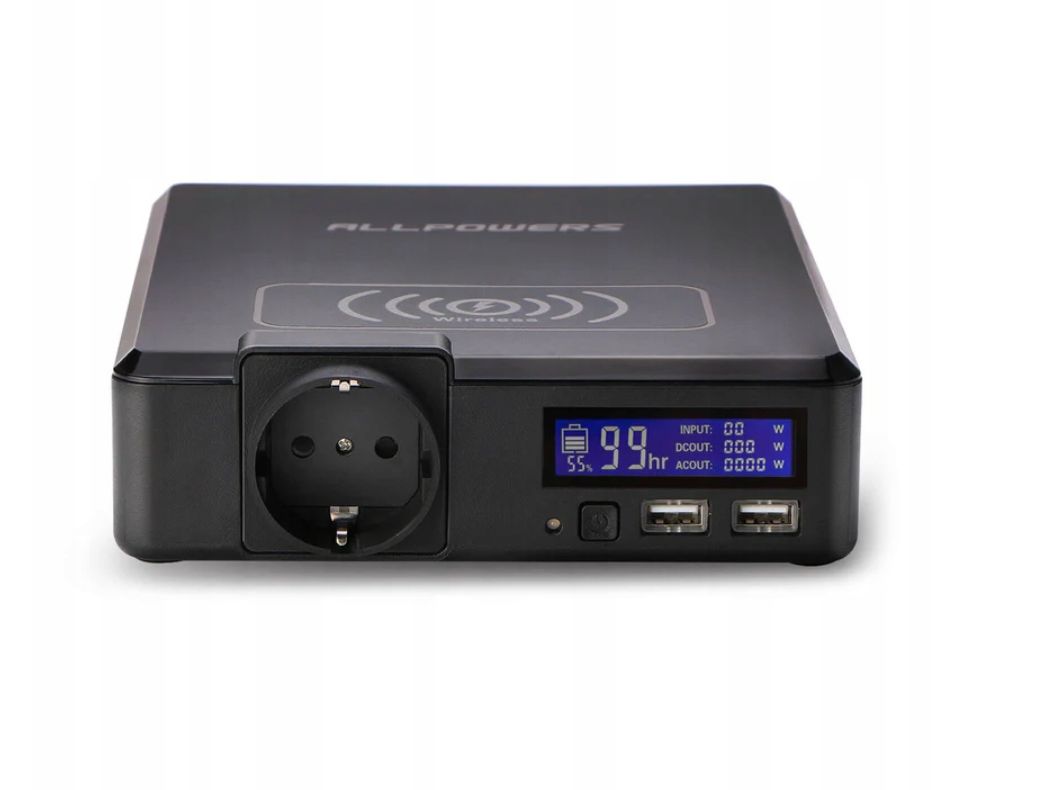
As a suitable 230 V AC portable power station offering a good price-to-performance ratio, we selected a unit from the Chinese manufacturer Allpower: the Allpowers S200. The unit provides 200 W / 230 V AC output power, weighs 1.4 kg, and has a battery capacity of 154 Wh. It is equipped with 2 × USB-A ports, 1 × USB-C port, and an active wireless charging pad for mobile phones.
The power station also incorporates an effective BMS (Battery Management System), providing protection against overcharging, deep discharge and overload, as well as temperature monitoring and cell balancing.
Particular attention should be paid when travelling by air. Airlines generally allow power banks with a capacity of up to 100 Wh to be carried on board. With prior airline approval, however, batteries with a capacity of up to 160 Wh may be permitted. The dimensions of the unit are 170 × 200 × 50 mm, which makes it suitable for the dimensions of the side pockets used on JAAZ gig bags.
We also successfully tested the power station as a power source for one of our preferred modeling multi-effects units, the Valeton GP 5. This unit can be powered from a 5 V USB supply and offers a high degree of effects versatility thanks to SnapTone technology, which is capable of loading converted profiles from the open-source Neural Amp Modeler (NAM) platform.
Because a portable power station contains high-power switching electronics, some units may introduce a small amount of interference into the audio signal path. This can be particularly noticeable when using BST mode or high-gain effects with high levels of amplification.
The solution is to earth the entire system by connecting the sleeve ground contact of the jack connector, via a conductor, to a suitable local earthing point. This may, for example, be a metal railing permanently embedded in the ground, a tent peg driven into the ground, or a similar arrangement. Any such earthing arrangement must comply with IEC 60364-5-54 or, where applicable, ČSN 60364-5-54.